Whose perspective does a record express?
Official reports and tribunal findings in the Annals convey the authorities’ perspective; church biographies recount the martyrs’ faith and lives. Reading both illuminates dates, the course of events and individual choices.[23]
1791 · from ritual dispute to political debate
The Jinsan incident began with ancestral rites and spirit tablets and entered political debate at court. Positions among some Noron officials and anti-Catholic Namin figures intersected as Jeongjo received reports and judged the case.[25]
Transfer and judgment in sequence
The Jeongjo Annals entry for the seventh day of the eleventh lunar month records Jeolla governor Jeong Min-si’s investigation report and court discussion. The next day’s entry states that the death sentence for Yun and Kwon had already been decided, tracing investigation, report and judgment.[19]
Yun and Kwon · the same 1791 case
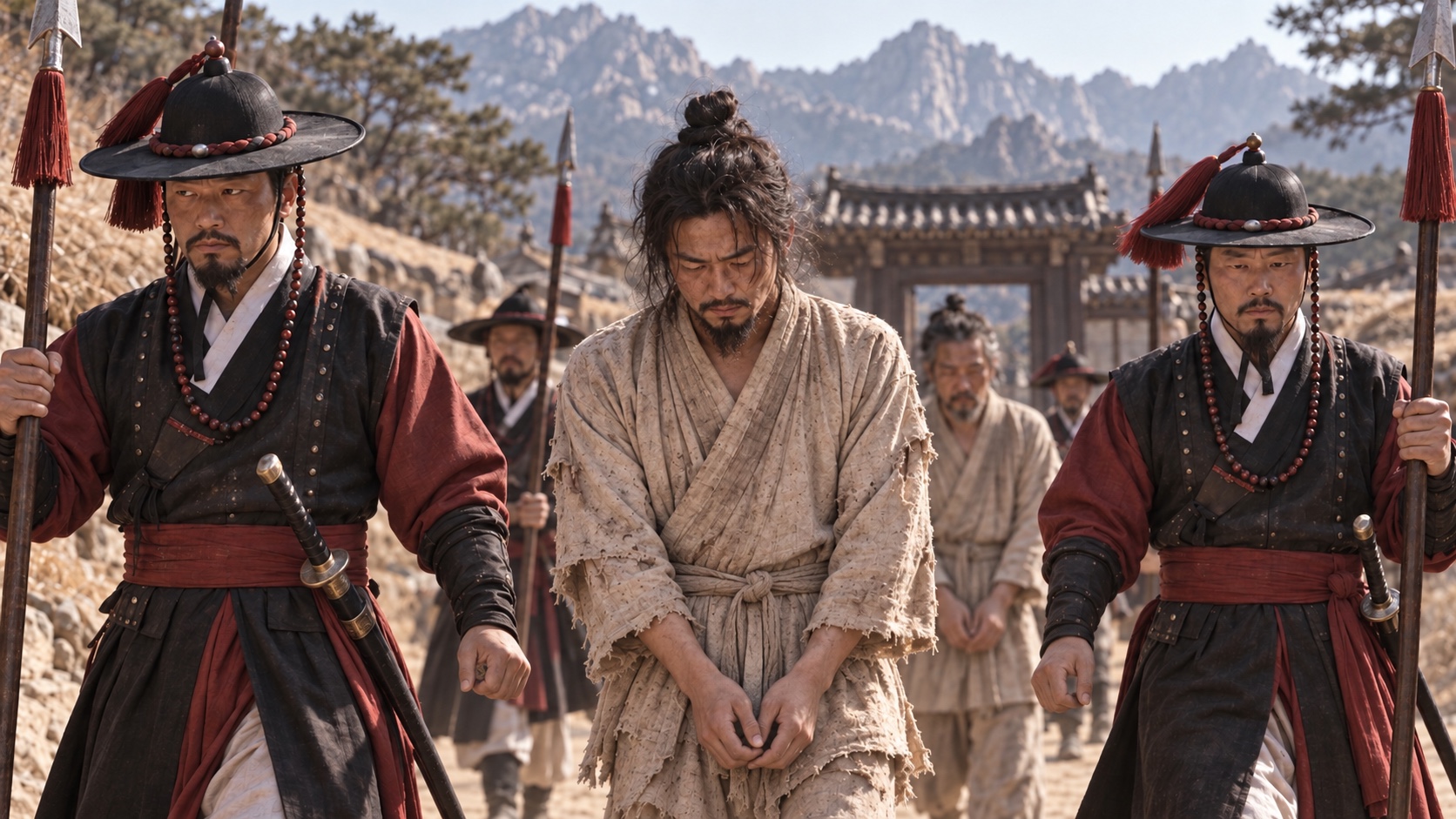
Born in Jinsan in 1759, Yun Ji-chung was baptised in 1787. In 1791 he followed his mother’s final wishes by holding her funeral according to Catholic rites. After fleeing an arrest warrant, he learned of his uncle’s imprisonment and surrendered at the Jinsan office. He was transferred to Jeonju and died as a martyr outside its south gate on 8 December.[26]
1801 · the dowager’s edict and Yun Ji-heon
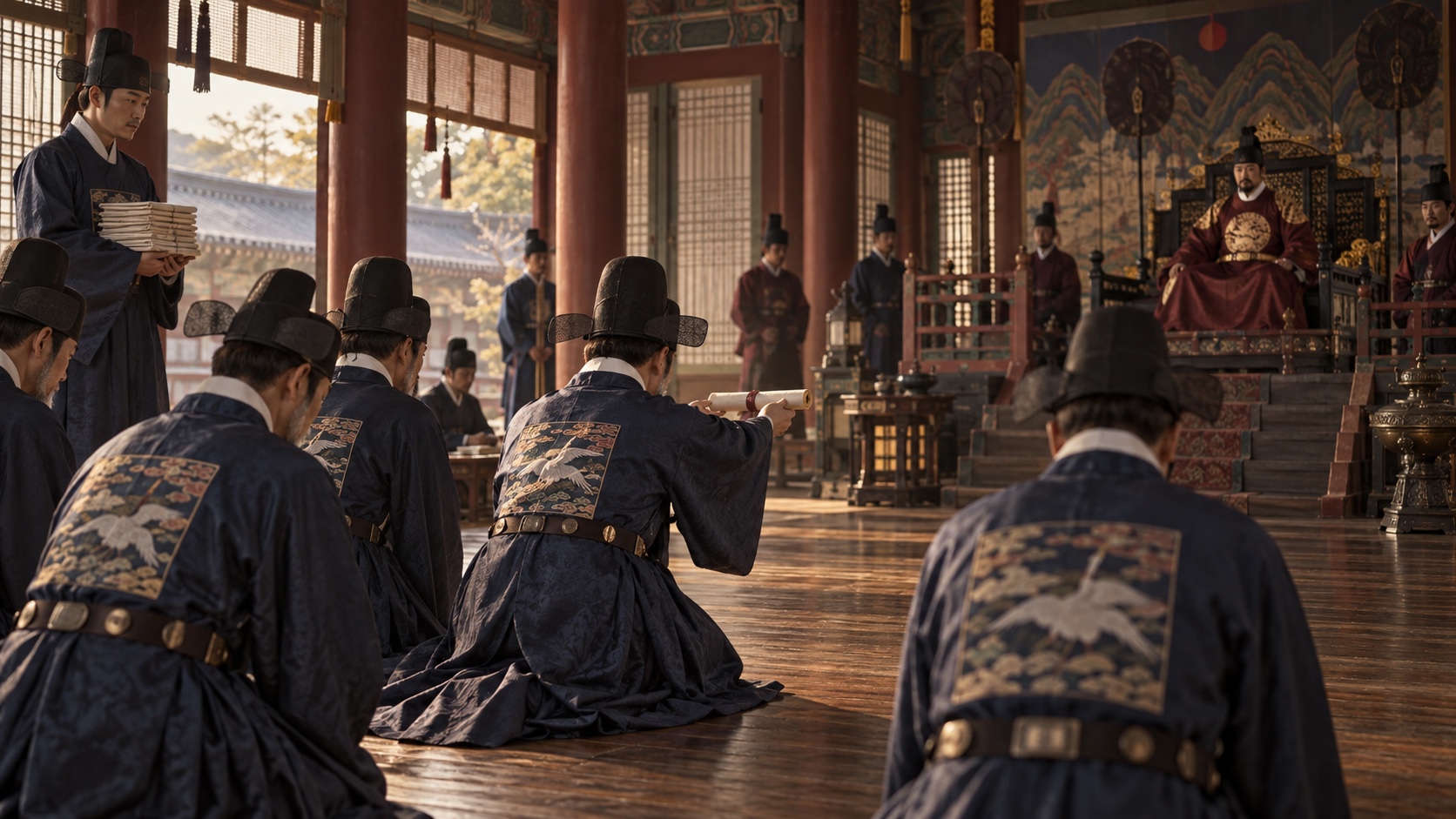
The record for the tenth day of the first lunar month of Sunjo’s first year contains Queen Dowager Jeongsun’s prohibition edict. During the Sinyu persecution under her regency after Jeongjo’s death, Ji-heon was investigated in Jeonju and Hanyang, returned to Jeonju and died as a martyr on 24 October 1801.[21]
Places in the records and landscapes of the journey
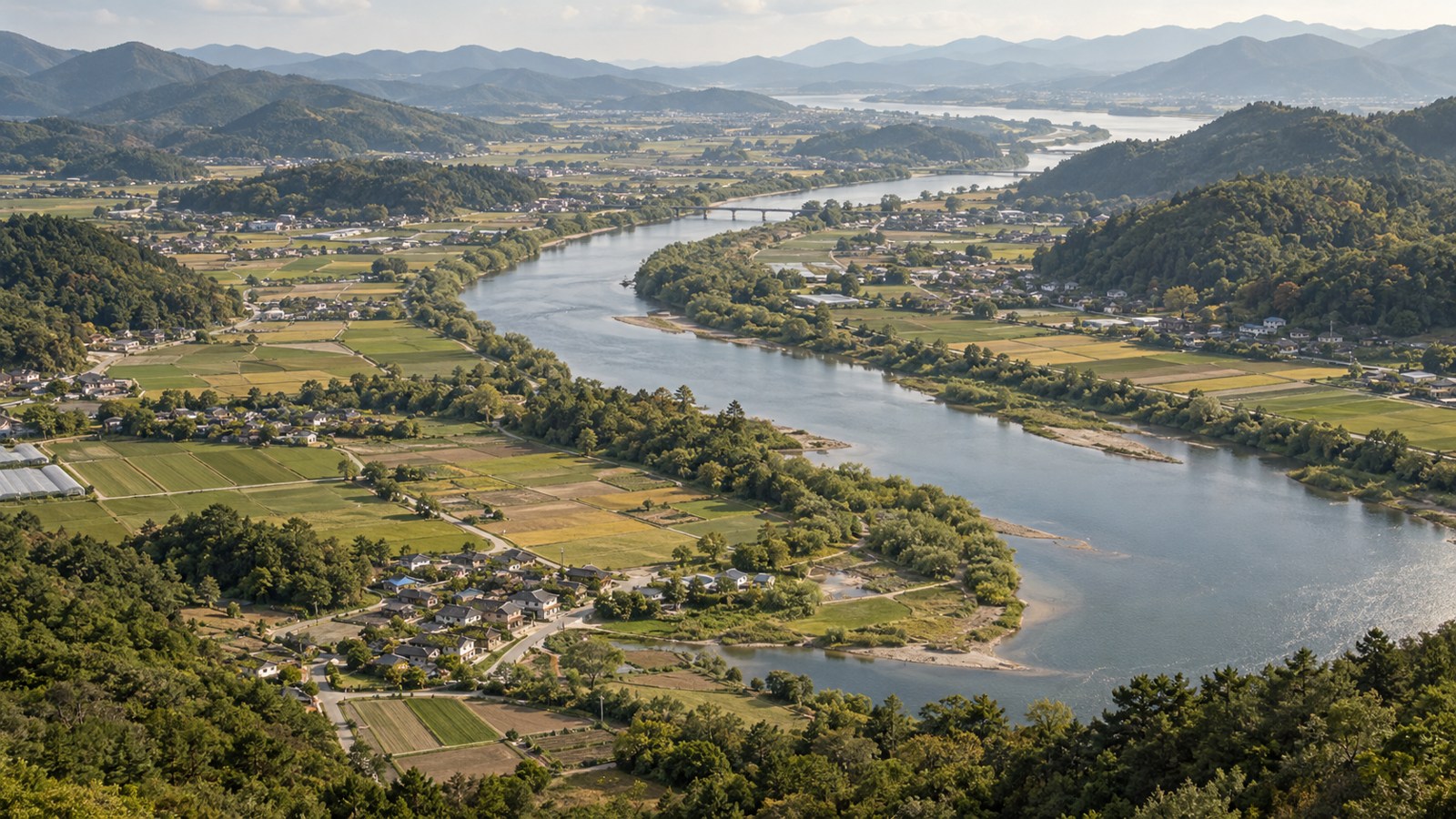
Historical sources identify major places including Jinsan, Jeonju Gamyeong and Hanyang. The map connects these places to show the course of events. AI-created mountains, roads and figures evoke the experience of pilgrimage.[24]
Today, and toward Korea 2027
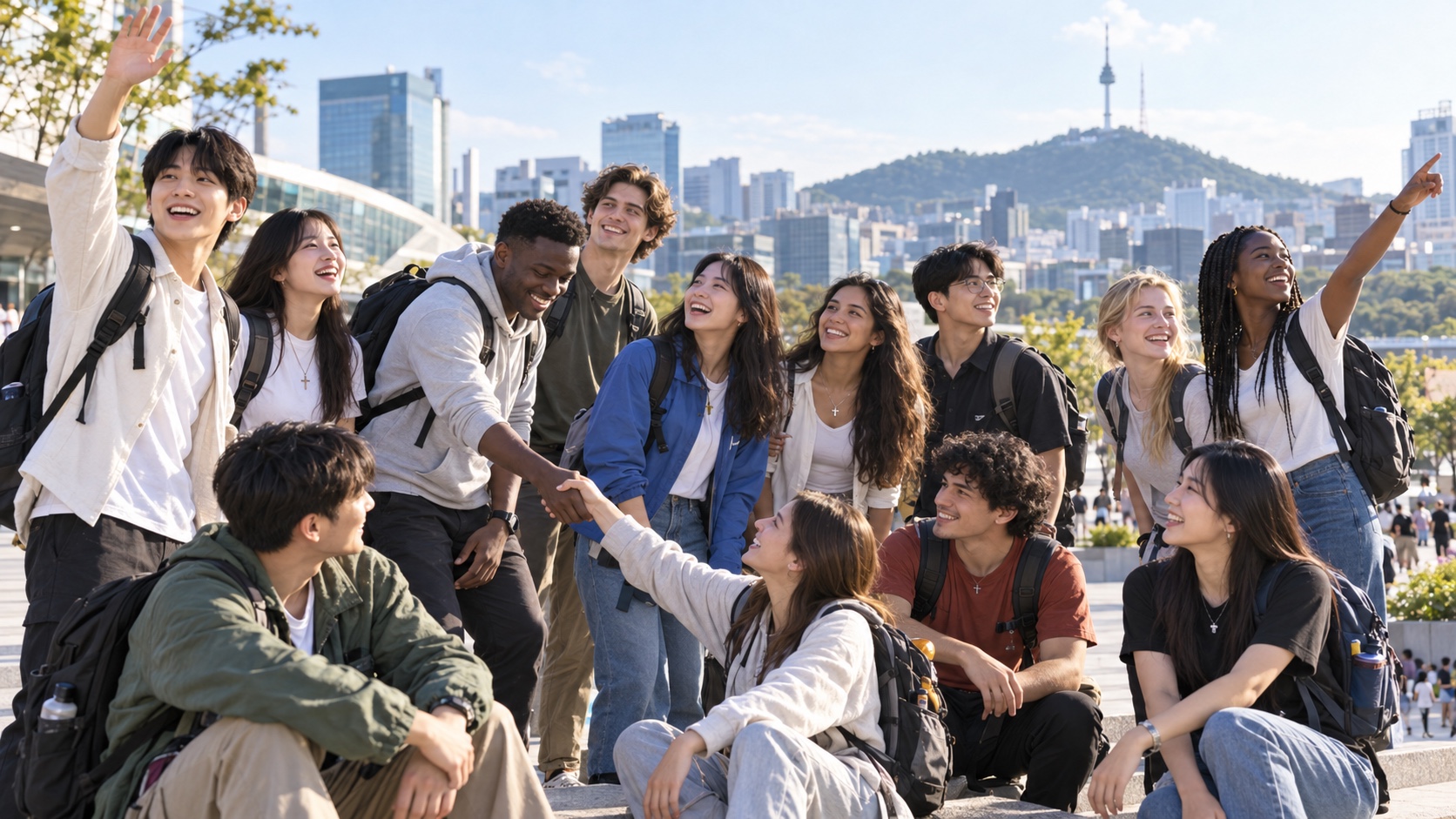
The memory of faith opens through pilgrimage today toward hope and solidarity. A creative vision of young people from diverse backgrounds walking together in Korea in 2027 expresses a longing for peace.